
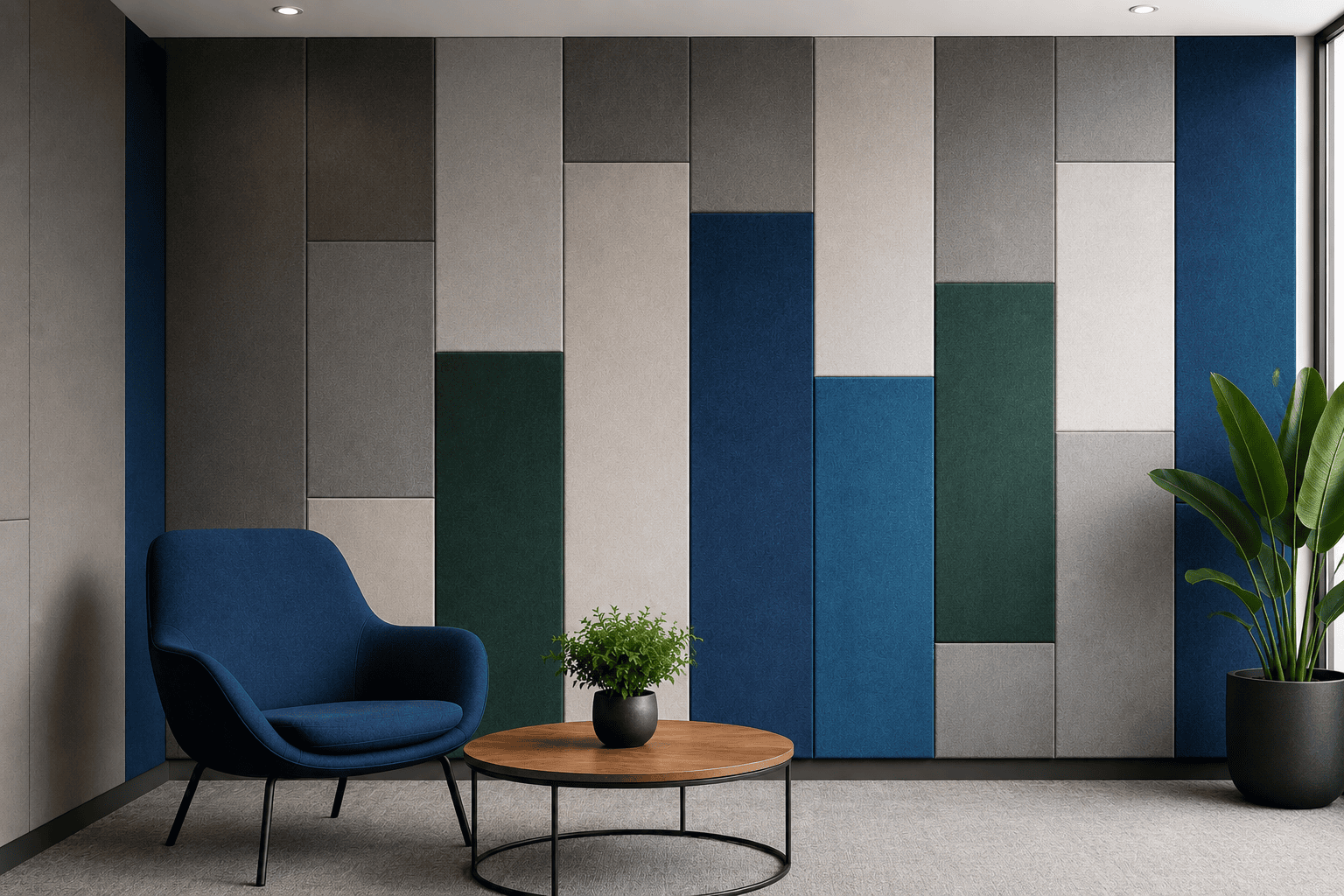
You’ve got drywall up. The room looks finished. But something still feels off. You hear every conversation from the next room. Echoes bounce off the walls. Meetings feel louder than they should. Here’s the thing. Drywall does one job well. It creates a surface. But it was never designed to manage sound.
That’s where acoustic wall panels come in.
Drywall was Never Built for Sound
Drywall is basically gypsum sandwiched between paper. It’s cheap. It’s fast to install. It’s everywhere. But sound? It treats drywall like a trampoline. Sound waves hit the surface and bounce right back into the room. That’s why open offices feel chaotic. That’s why conference rooms echo. That’s why your home theater sounds muddy.
Drywall gives you walls. It doesn’t give you acoustic comfort.
The Difference between Blocking and Absorbing
Most people confuse soundproofing with sound absorption. They are not the same thing. Soundproofing blocks noise from traveling between rooms. It needs mass. Heavy materials. Sealed gaps. Sound absorption controls noise inside a room. It reduces echo. It softens reverberation. It makes speech clearer.
Acoustic wall panels are absorbers. They don’t stop sound from leaving the room. They stop sound from bouncing around inside it. That distinction matters. If your problem is echo and clarity, drywall won’t fix it. Acoustic panels will.
What Acoustic Panels actually do
Here’s the simple science.
Sound waves hit the panel surface. The porous material inside traps the energy. Friction turns that energy into a tiny amount of heat. The sound doesn’t reflect back. It gets absorbed. The result? Shorter reverberation time. Clearer conversations. Less fatigue at the end of the day. Acoustic boards and panels are rated by something called NRC. Noise Reduction Coefficient. The scale runs from 0 to 1. Higher is better.
A decent acoustic panel hits 0.80 or above. That means it absorbs most of the sound that hits it.
Drywall scores near zero.
Read to learn more about acoustic wall panels here: Acoustic Wall Panels: Intersection of Design, Acoustics & Wellness
The Visual and Functional Harmony of Modern Acoustic Wall Panels
Today’s interior architecture demands more from materials than simple performance; it requires a seamless blend of aesthetics, sustainability, and structural integrity. For a long time, traditional acoustic treatments were treated as an afterthought. They were bulky, industrial items tucked away in corners or disguised behind heavy fabrics.
Modern design, however, demands components that actively contribute to the overall visual language of a space. This is where high-performance acoustic wall panels redefine interior spaces. By utilizing advanced materials like dense polyester felt cores or integrated wood-wool composites, these panels merge technical noise control and sophisticated interior styling.
What’s More?
When you look closely at how sound moves through a contemporary open-plan office, a high-end restaurant, or a residential media room, you notice that hard architectural surfaces. This can include concrete floors, expansive glass windows, and bare drywall. These create a compounding echo chamber.
Drywall reflects these waves relentlessly, turning every voice, keyboard click, and movement into ambient fatigue. Integrating architectural acoustic boards directly into the design layout interrupts these reflection paths without compromising the room’s aesthetic workflow.
Designers can now specify custom shapes, fluted profiles, and rich textured finishes that look like custom wall art rather than sound-masking hardware.
What has the Integration of Sustainable Components Done?
Furthermore, the integration of sustainable components has transformed how specifiers approach wall treatments. Eco-friendly PET felts and wood-wool variants offer exceptional Noise Reduction Coefficient (NRC) ratings, often absorbing up to eighty or ninety percent of the sound energy that impacts their surface.
Unlike old-school fiberglass that required PPE and specialized containment during installation, modern architectural panels are safe, non-toxic, and free of harmful volatile organic compounds (VOCs). They install cleanly onto existing drywall substrates using simple clips, adhesives, or direct-mount systems, making retrofitting an office or home effortless.
Ultimately, solving a room’s acoustic profile should never mean sacrificing its visual identity. By pairing high NRC ratings with flexible design options, interior designers can create spaces that are as quiet as they are visually striking. Drywall gives a room its structural boundaries, but thoughtfully integrated acoustic panels give it life, comfort, and balance.
Why this Matters More than Ever
Modern spaces are louder than they used to be. Open plans replaced private offices. Hard surfaces replaced carpets and curtains. Glass walls replaced solid partitions. Every design trend of the last twenty years made rooms more reflective.
Drywall plus glass plus concrete equals echo. It’s physics. Not a design flaw. Acoustic wall panels put soft, porous surfaces back into the room. They break up the reflections. They bring the noise floor down.
The Bottom Line
Drywall gives you a wall. Acoustic wall panels give you a room that works. If you’re tired of echo, noise fatigue, and meetings that sound like a tunnel, the fix isn’t more drywall. It’s absorption. And absorption starts with the right acoustic board.
The Tranquil Global Difference
At Tranquil Global, we don’t just sell panels. We solve acoustic problems.
Our range covers every need. ECOCORE PET panels for sustainable offices. ELARA Fiberglass for studios and auditoriums. ECOWOOD Wooden panels for spaces where design matters as much as performance.
Every panel is engineered for real absorption. Not decoration dressed up as acoustics. We work with architects and designers. We understand that acoustic treatment should look intentional. Not like an afterthought.
And we back every product with proven performance data. Because guessing is not a strategy.
Ready to hear the difference? Talk to Tranquil Global about acoustic wall panels that actually perform. Your ears will thank you.
FAQs
Do acoustic wall panels actually block sound from leaving the room?
No. Acoustic wall panels absorb sound inside the room. They reduce echo and reverberation. They do not block sound from traveling through walls. For blocking, you need soundproofing materials like mass loaded vinyl.
How many acoustic panels do I need for a room?
It depends on the room size, ceiling height, and surface materials. A general starting point is covering 15 to 30 percent of the wall or ceiling surface with absorptive panels.
What is the difference between acoustic wall panels and acoustic board?
The terms are often used interchangeably. Both refer to sound-absorbing materials designed to reduce echo and control reverberation inside a room. Acoustic board is typically a broader term that includes panels, sheets, and other formats.