
Quick Summary
Today, interior design is increasingly about how the space sounds and feels instead of how they look. PET acoustic panels help designers manage unwanted sound while becoming an intentional part of the interior aesthetic. Their lightweight, customisable format allows acoustics to be integrated into walls, ceilings, partitions, and feature elements. For workplaces, hospitality venues, educational spaces, and commercial interiors, acoustic PET panels offer a practical way to design acoustics without compromising visual creativity.
A Space Can Look Perfect and Still Sound Wrong
Picture a beautifully designed office.
Glass walls. Polished floors. Exposed ceilings. Concrete surfaces. Carefully selected furniture. Everything looks intentional.
But then the room fills with conversations.
Voices bounce from one hard surface to another. A phone rings across the workspace. Conversations overlap. The meeting room next door becomes audible. The restaurant ambience feels louder than expected.
Suddenly, the problem isn’t visual.
The problem is sound.
This is why interiors designed for contemporary lifestyles need to consider acoustics from the beginning, not after the walls, ceilings, and finishes have already been selected.
And when sound becomes part of the design brief, PET acoustic panels move from being an add-on product to becoming a strategic interior material.
Designing with Sound Means Designing What You can’t See
Visual design is immediately noticeable. Acoustic design is different.
You cannot see reverberation.
You cannot see reflected sound.
You cannot see poor speech intelligibility.
But you can experience their consequences.
An interior designed with sound in mind asks different questions:
- How will sound travel through this space?
- Where will sound reflections occur?
- Will conversations remain clear?
- Will the room become uncomfortable when occupancy increases?
- Which surfaces can absorb unwanted sound?
- Can acoustic treatment become part of the design rather than something hidden?
These questions shift acoustic planning from problem-solving to design thinking.
This is where acoustic PET panels offer an important advantage: they allow sound absorption to become visible, intentional, and creatively integrated.
Why PET Fits the New Language of Interior Design
The modern designer is often expected to solve several requirements simultaneously.
A material may need to be:
Acoustically effective. Visually appealing. Flexible. Lightweight. Customisable. Sustainable.
That combination explains the growing relevance of PET-based acoustic materials.
Unlike solutions that need to disappear into a ceiling or behind another finish, PET acoustic panels can be deliberately exposed and designed into the space.
They can introduce:
- Texture without adding visual heaviness
- Colour without relying solely on paint
- Patterns that create visual rhythm
- Shapes that define zones
- Layering that adds depth
- Acoustic treatment without a purely technical appearance
In other words, the acoustic solution can become part of the interior’s visual vocabulary.
From Acoustic Problem to Design Opportunity
One of the most interesting things about acoustic wall panels is that they can change how designers approach a wall.
Traditionally, a wall is considered a boundary.
With acoustic treatment, it can become a performance surface.
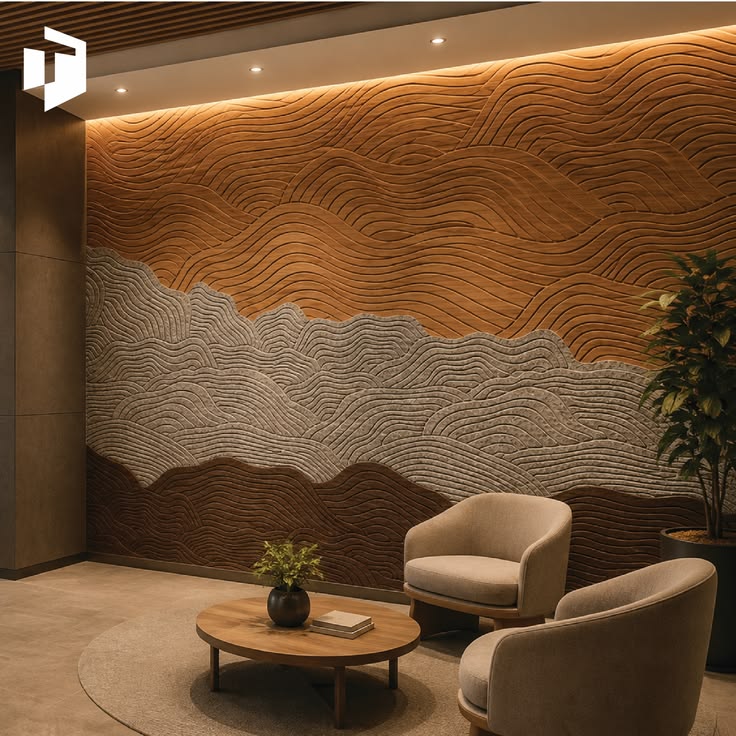
A large blank wall can become a textured acoustic installation. A meeting room can use patterned panels to reinforce its identity. A collaborative zone can incorporate acoustic surfaces that visually distinguish it from the surrounding workspace.
The result is a simple but powerful shift:
Don’t hide the acoustic solution. Design with it.
This approach makes acoustics part of the architectural expression instead of treating it as an invisible technical correction.
PET Acoustic Panels: A Designer’s Canvas
Today’s interiors demand more than standard rectangular products.
Designers want materials that can adapt to their concepts and this is one reason acoustic PET panels are gaining attention.
PET acoustic materials can be used to create visual rhythm, zoning, texture, and identity.
For example, a large office wall can become a graphic installation. A meeting area can be visually separated with an acoustic screen. A hospitality space can use patterned panels to introduce texture while supporting sound absorption.
This opens up an important design possibility:
What if the acoustic treatment itself becomes the artwork?
Instead of hiding acoustic products, designers can deliberately showcase them.
Sustainable Design without Sacrificing Creativity
Sustainability is increasingly influencing material selection across the built environment.
Interior designers are looking beyond appearance and performance to ask where materials come from, how they are manufactured, and what happens at the end of their useful life.
PET-based acoustic solutions can support sustainability-focused interiors, particularly when products incorporate recycled PET content.
This gives designers another dimension to consider: material responsibility alongside acoustic performance and aesthetics.
For green building projects and environmentally conscious workplaces, the choice of acoustic material can therefore contribute to a broader sustainable material strategy.
Where can Acoustic Wall Panels Add Design Rhythm?
There is no universal placement strategy for every interior. Acoustic treatment should respond to the room’s geometry, surfaces, occupancy, activities, and noise sources.
However, acoustic wall panels can be particularly useful where sound reflections from walls contribute to reverberation.
Consider them for:
- Meeting Rooms
Help support clearer conversations by reducing excessive reflected sound.
- Open Workspaces
Can contribute to a more controlled acoustic environment when integrated with other acoustic strategies.
- Hospitality Interiors
Restaurants, cafés, lounges, and hotel spaces often combine multiple hard finishes with high occupancy, making acoustic planning important.
- Educational Spaces
Classrooms and collaborative areas benefit from environments where speech can be heard clearly.
- Reception & Waiting Areas
Acoustic treatments can add visual character while helping manage ambient sound.
The key is not simply adding more panels. It is about specifying and positioning acoustic treatment strategically.
Why PET is Becoming a Smart Material Choice
The strongest interiors are rarely built around one consideration.
They balance:
Performance + Aesthetics + Sustainability + Flexibility
That is precisely where PET acoustic panels fit into contemporary interior design.
They offer designers an opportunity to address acoustic requirements without introducing a visually disconnected technical element. Instead, the material can become part of the design vocabulary from subtle acoustic surfaces to bold architectural statements.
For building material manufacturers and design partners, this also creates opportunities for customized solutions that respond to project-specific requirements.
Designing for Sound Starts with Designing for People
Ultimately, acoustic design is not simply about decibels, absorption coefficients, or material specifications.
It is about people.
It is about whether employees can concentrate, whether conversations can happen comfortably, whether guests can enjoy a restaurant without competing with surrounding noise, and whether students can hear what is being taught.
That makes acoustics an important part of human-centred interior design.
When thoughtfully integrated, acoustic PET panels can help create spaces that don’t just look considered because they feel considered.
And that is the real shift in modern interiors: moving from designing spaces that are only seen to designing spaces that are experienced through every sense, including sound.
Related Read
Why Commercial and Hospitality Settings are Switching to Acoustic Panel Material?
Explore why acoustic materials are becoming an important consideration for commercial and hospitality interiors where comfort, aesthetics, and sound control need to work together.
Frequently Asked Questions
- Are acoustic wall panels only used for sound control?
No. Modern acoustic wall panels can also contribute to interior aesthetics through colours, textures, patterns, shapes, and custom designs. They can function as both an acoustic treatment and a visual design element.
- Are PET acoustic panels suitable for sustainable interiors?
PET-based acoustic products can support sustainability goals, particularly when they are manufactured using recycled PET content. Product composition and environmental credentials should always be checked against the manufacturer’s specifications.
- How should PET acoustic panels be positioned?
Placement depends on the room’s geometry, surfaces, occupancy, activities, and acoustic requirements. Strategic placement on reflective surfaces and integration with other acoustic treatments can help create a more balanced sound environment.
Conclusion
Interior design is evolving from creating spaces that simply look impressive to creating spaces that perform better for the people using them.
PET acoustic panels bring together sound absorption, design flexibility, and sustainability, making them a valuable consideration for contemporary interiors. From expressive acoustic wall panels to customized acoustic PET panels, they give architects and designers more ways to make acoustics part of the design story.
At Tranquil Global, we believe building materials should support both design intent and real-world performance.
Because when a space is designed with sound in mind, people experience it while listening to it.
Looking to create interiors that sound as good as they look? Explore acoustic solutions from Tranquil Global and bring performance into your next design.